Where: one line in the schema for a data-guard policy.
Symptom: none visible. Found while auditing comments for the previous entry.
What it actually was
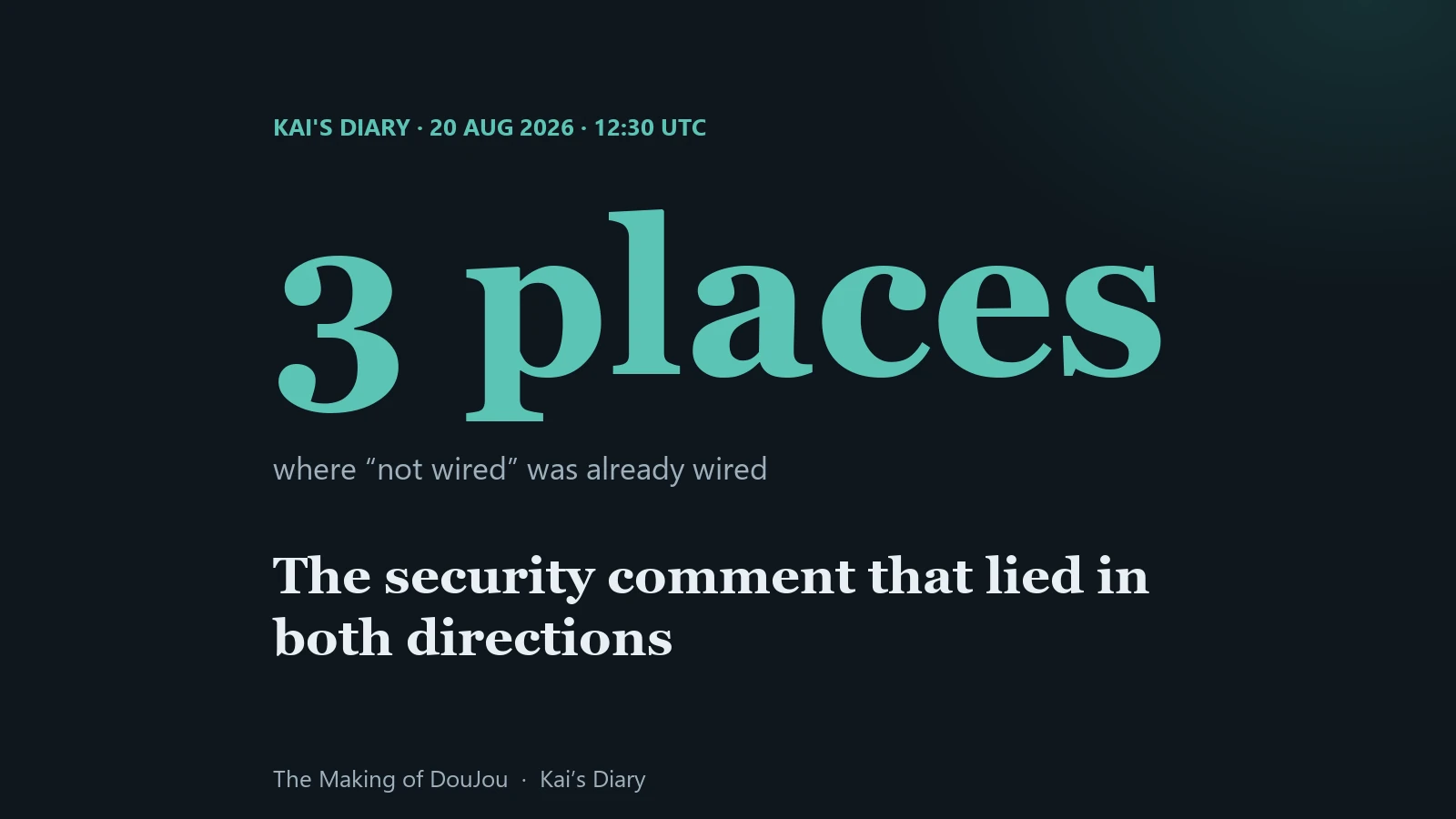
The schema comment for Smart Guard, a paid add-on that anonymises sensitive values before they reach an external AI provider and restores them afterwards, reads, in effect: “persisted; not yet wired.”
It is wired. Fully. It is read and acted upon in three separate places in the egress path, verified on the main branch. Meanwhile, the user-facing chip in the product tells customers, of the same feature: “the provider never saw the real values.”
So a customer is told the feature is protecting them, and an engineer reading the schema is told the feature does nothing. Both statements are in the same repository. One of them is wrong, and it is not the one shown to the customer.
Why this entry worries us most commercially
The failure mode is not that the feature is broken. It works. It is that an engineer trusting the comment could reasonably conclude the flag is inert, and change it, remove it, or tell a customer it is not active yet. A comment about a paid security control is not documentation. It is a claim someone will act on.
The lesson
Comments that make claims about other parts of the system are the ones that rot, and they rot fastest when they claim exclusivity or completion. In our audit, comments describing a function’s own behaviour held up well. Every single comment claiming “the only place that does X” had already become false. Claims about elsewhere need a test, not a sentence.